How a Matchmaking Brand Rescued Its Inbox, and Rebuilt the Trust of Thousands of Subscribers

Your Subscribers Didn't Leave. Your emails did.
There is a version of email failure that is easy to diagnose: the numbers tank overnight, the team panics, and everyone can see the problem. That version is almost never what happens.
The version VidaSelect experienced is far more common and far more dangerous. A slow, quiet decline. Open rates are drifting down month by month. Engagement is growing patchy and inconsistent. And at the core of it, a mystery: the content was good, the subscriber list was healthy, and the brand was credible enough to earn mentions in The New York Times, CNN, Forbes, and BBC. So why were the emails disappearing?
The answer was not in the copy. It was in the infrastructure: a fragmented multi-platform sending setup, misaligned DNS records, and a domain reputation that had eroded silently over months until Gmail, Outlook, and Yahoo were quietly routing every campaign away from the inbox.
What followed was a systematic rebuild that took VidaSelect from a 20% open rate and unpredictable inbox placement to consistent 50-60% open rates across all major providers. This is how it happened.
About VidaSelect
VidaSelect is a leading matchmaking and virtual dating assistant service built on a subscriber-driven communication model. The brand has earned national and international media recognition, featured in The New York Times, CNN, Forbes, and BBC and serves clients who rely on ongoing, personalized guidance throughout their journey.
Email is not a marketing add-on for VidaSelect. It is the primary channel through which the brand guides clients, shares insights, and maintains the long-term relationship that matchmaking depends on. When email breaks down, it is not just a marketing metric that suffers it is the brand-to-client connection itself.
That is exactly what made their deliverability decline so damaging. and their recovery so meaningful.
The Slow Decline No One Could Explain
VidaSelect's team knew something was wrong long before they could pinpoint what. The degradation was gradual the kind that's easy to attribute to seasonal patterns or list fatigue rather than infrastructure failure. By the time they reached out, the symptoms had compounded into a clear crisis.
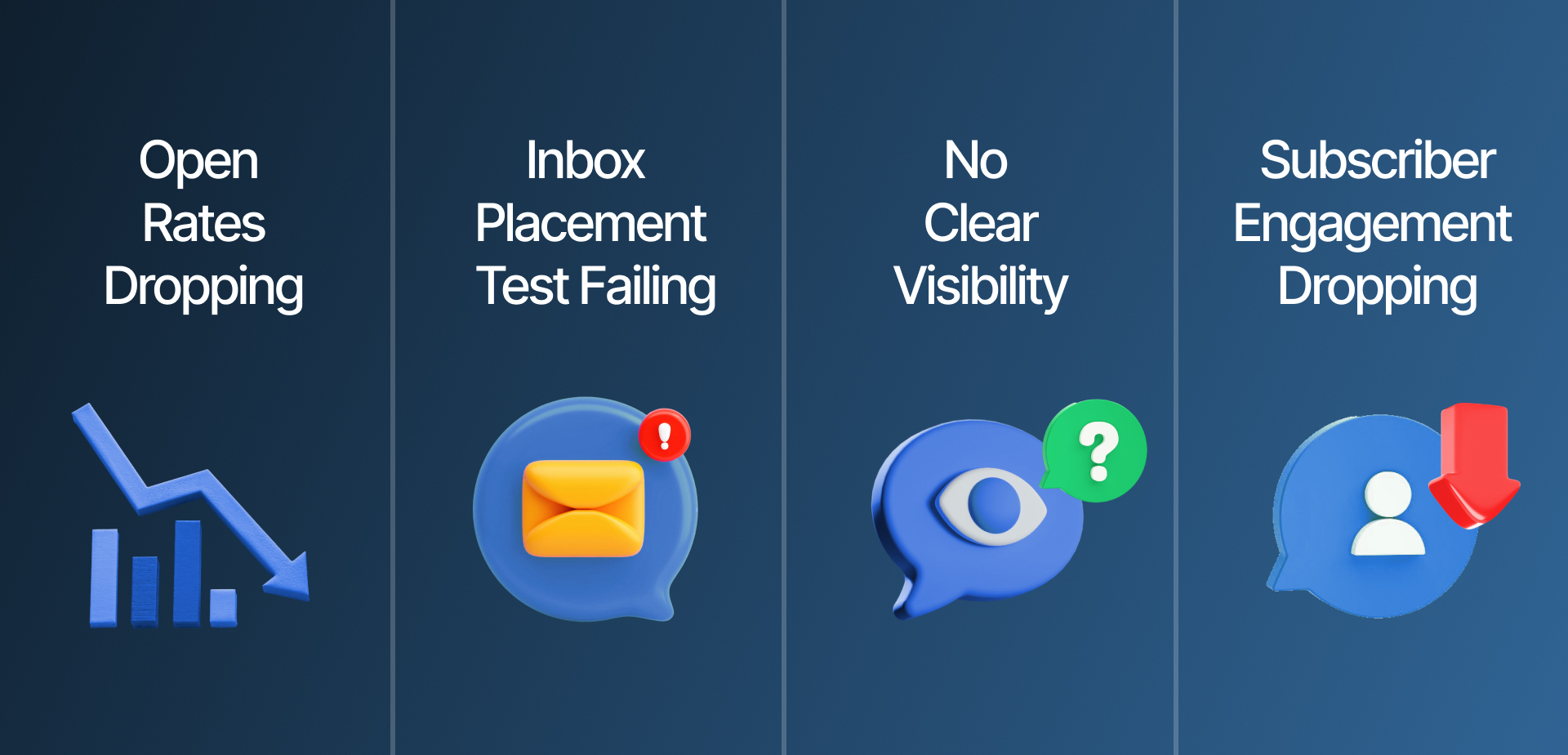
Six Warning Signs That Were Already Present
Signal 1: Open rates had dropped to approximately 20%, well below benchmarks for an engaged, opted-in subscriber base.
Signal 2 : Emails were routing to Spam or Promotions folders across Gmail, Outlook, and Yahoo not occasionally, but consistently.
Signal 3 : Subscriber engagement had become erratic and unpredictable, with no clear pattern to explain the inconsistency.
Signal 4 : The team had no clear visibility into inbox placement; they could see the symptoms in their metrics, but not the cause.
Signal 5 : Multiple sending platforms had created fragmented authentication each platform operating with its own incomplete setup.
Signal 6 : DNS and domain records were misaligned with current best practices, quietly undermining every send.
The Turning Point Insight
VidaSelect's content strategy was strong. Their subscriber list was clean. Their brand credibility was unquestionable. None of that mattered, because the technical layer beneath the campaigns had fractured. Multiple sending platforms had created authentication gaps, and DNS misconfigurations meant that major mailbox providers could not reliably verify who the emails were coming from. The content never got the chance to perform.
This is the pattern that makes fragmented-platform deliverability failures so insidious: the damage is invisible at the campaign level but accumulates relentlessly at the infrastructure level. By the time open rate numbers become alarming, months of reputation erosion have already occurred.
The Deliverability Rebuild Foundation: First, Scale Second
The instinct for most teams in this situation is to optimize their way out better subject lines, A/B tests, send-time experiments. This case was treated as what it actually was: a technical foundation failure. The rebuild followed a deliberate sequence: diagnose the full stack, repair the infrastructure, then protect the recovery with monitoring systems that prevent regression. 1
Full Deliverability Audit: Map Every Point of Failure
Comprehensive DNS review across all sending platforms: SPF, DKIM, and DMARC records audited for gaps and misalignments.
Domain reputation analysis: trust signal deterioration identified and quantified, with each authentication failure mapped to its impact.
Sending pattern mapping to identify volume, timing, and routing behaviors triggering spam filters.
IP reputation review and segregation assessment shared IP exposure identified and isolated.
Multi-platform authentication fragmentation was fully documented, creating a clear remediation roadmap before any fixes were applied. 2
Infrastructure Rebuild, Fix Root Causes, Not Symptoms
Full DNS repair: SPF, DKIM, and DMARC records rebuilt and aligned across all active sending platforms.
Controlled domain warmup reputation was rebuilt gradually with structured volume increases, avoiding the hard resets that trigger provider suspicion.
Sending pattern correction volume pacing, timing intervals, and list segmentation restructured to align with inbox provider expectations.
IP issue resolution and clean stream separation send isolated from historical risk exposure.
Unified routing architecture built across platforms, replacing the fragmented multi-platform setup with a coherent, authenticated sending structure.
Continuous Monitoring: Protect What Was Built
Daily inbox placement monitoring across Gmail, Outlook, Yahoo, and Apple Mail real-time visibility replacing after-the-fact reporting.
Domain and IP reputation tracking with threshold alerts, enabling issues to be caught and resolved before they affect campaign performance.
Pre-launch campaign compliance checks: every major send reviewed for content triggers, authentication alignment, and volume appropriateness.
An ongoing partnership was established. VidaSelect transitioned from reactive crisis management to proactive, continuous deliverability maintenance.
The sequence was non-negotiable. Audit before you fix. Fix before you monitor. Monitor before you scale. Skipping any step means rebuilding on a cracked foundation.
From Invisible to Inbox: Across Every Major Provider
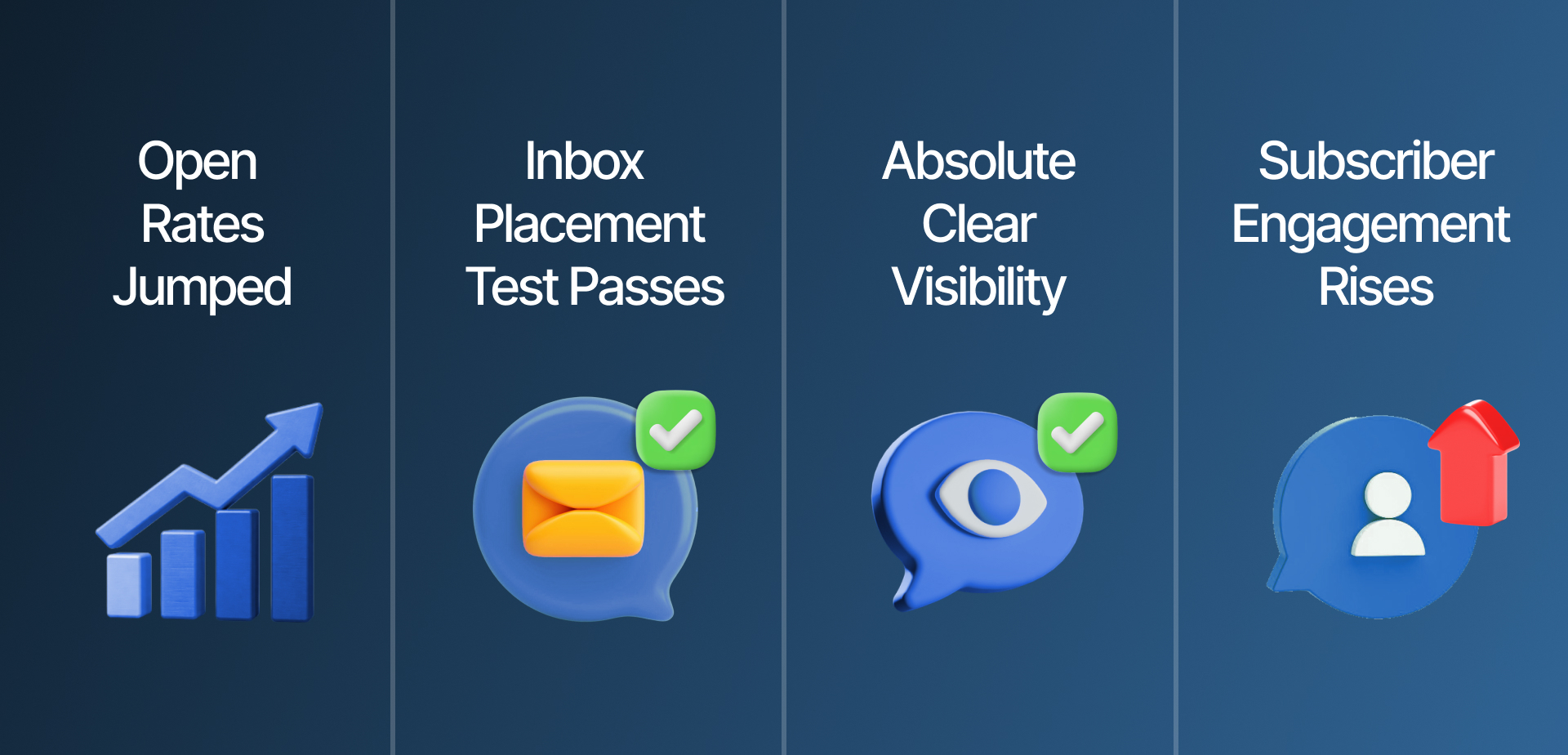
What the Recovery Actually Delivered
Open rates rising from 20% to a stable 50-60% range means roughly 2.5 to 3 times as many subscribers are now reading every message VidaSelect sends. But the more meaningful number is harder to put in a table: the restored relationship between the brand and its audience.
For a matchmaking service, email is not transactional; it carries guidance, trust, and continuity. Every email that landed in a spam folder was not just a missed metric. It was a missed moment in a client's journey. The infrastructure recovery did not just improve deliverability. It restored the brand's ability to show up for its audience.
Within weeks of the rebuild launching, open rates began climbing, first crossing 30%, then 40%, and finally stabilizing in the 50-60% range. That stability held. No spike-and-crash pattern. A new, sustainable baseline built on solid infrastructure.
3 Lessons for Any Brand Sending Across Multiple Platforms
VidaSelect's story is not unusual in the subscription and service email space. Fragmented platform setups, gradual reputation erosion, and invisible authentication failures affect brands across every industry. Here is what this case study teaches us:
Lesson 1: Multiple Sending Platforms = Multiple Authentication Failure Points
Every platform you use to send email creates a new SPF, DKIM, and DMARC requirement. Most teams configure the first one correctly and assume the rest inherit those settings. They do not. Each platform needs its own properly aligned authentication setup, and if even one is misconfigured, it can erode your overall domain reputation across all providers, even on the platforms that are set up correctly.
Lesson 2: Slow Decline Is More Dangerous Than a Hard Crash
A sudden inbox failure triggers immediate action. A gradual open rate slide from 48% to 20% over eight months gets attributed to content fatigue, seasonality, or algorithm changes, not infrastructure failure. By the time the root cause is identified, months of reputation damage have already accumulated. Continuous monitoring is the only reliable way to catch slow-burn failures before they become crises.
Lesson 3: Your Subscribers Did Not Disengage; You Lost the Infrastructure to Reach Them
The most important reframe in VidaSelect's recovery: the audience was still there. The content was still strong. The problem was entirely on the sending side. Before assuming subscriber fatigue, list quality issues, or content problems, audit the technical layer. In most cases of unexplained open rate decline, mailbox providers stopped trusting the sender, not the message.
READY TO RUN YOUR OWN AUDIT? - https://xemailaudit.com/
Is Your Email Program Showing These Same Warning Signs?
Open rates are declining without a clear explanation. Emails going to Spam or Promotions. Multiple sending platforms with authentication setups you have never fully audited. If any of these sound familiar, the VidaSelect scenario is closer than you think, and the fix is more methodical than you might expect.