What Is Email Warmup and Why Does It Matter?
What Is Email Warmup and Why Does It Matter?
If your cold emails are landing in spam on day one, your copy probably isn't the problem. Your mailbox is. Email warmup is the process that stands between a brand-new mailbox and a deliverability disaster and skipping it is one of the most common reasons outbound campaigns fail before they start.
Your New Mailbox Has Zero Reputation: Here's Why That's a Problem
Mailbox providers like Gmail and Microsoft assign trust scores to every sender. These scores are built from observable behavior: how often recipients engage, how many emails bounce, how many complaints come in. A brand-new mailbox has none of that history, which means providers have no evidence you're a legitimate sender so they default to suspicion.
That suspicion has a direct consequence. Without a sending history, your emails are far more likely to land in spam from the first send. It doesn't matter how well-written your subject line is or how targeted your list is. A mailbox with no reputation is a liability.
Most deliverability failures in cold email trace back to this: someone set up a new mailbox, connected it to a campaign tool, and started blasting 100 emails a day on day one. Providers see that behavior constantly from spammers. The fix isn't better copy it's building reputation first.
What Email Warmup Actually Is
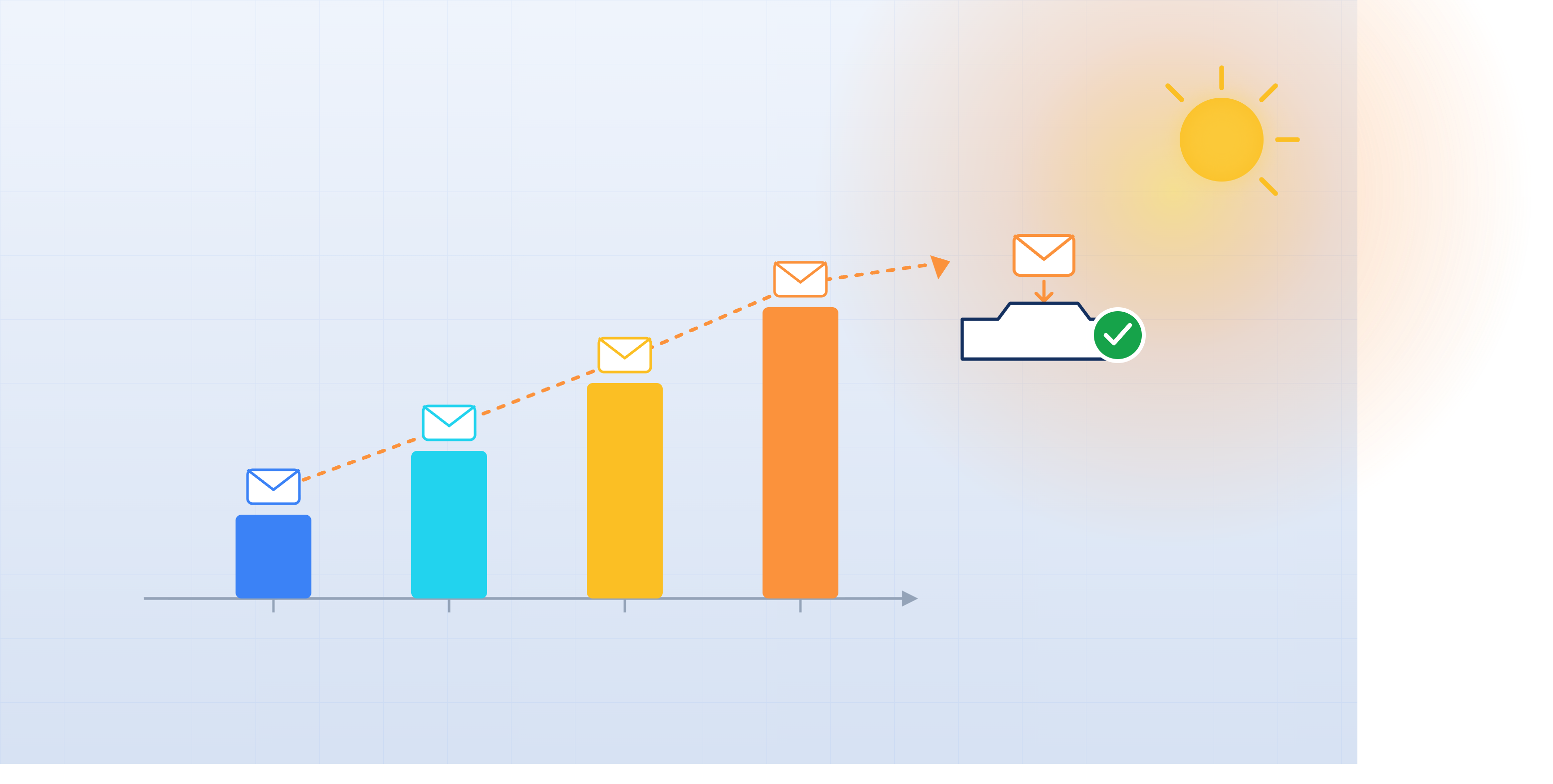
Email warmup is the process of gradually increasing sending volume on a new mailbox to build sender reputation before you launch full campaigns. Instead of going straight to 80 or 100 emails per day, you start small 10 to 15 emails per day and increase steadily over three to four weeks.
The mechanism matters here. Warmup works by generating positive engagement signals: emails that get opened, replied to, and critically not marked as spam. These interactions tell mailbox providers that real people want to hear from this sender, which builds trust incrementally.
The goal is simple: demonstrate legitimate sending behavior before you scale. Think of it as introducing yourself to Gmail and Outlook before you start making asks. Warmup typically runs three to six weeks before a mailbox is ready for full campaign volume, depending on your sending goals and provider.
How Mailbox Providers Decide Whether to Trust You
Providers don't rely on a single signal. They monitor complaint rates, bounce rates, engagement levels, and the consistency of your sending patterns all at the same time. A sender who builds volume slowly and generates replies looks very different from one who appears out of nowhere sending hundreds of messages a day.
Sudden volume spikes on a new mailbox are one of the clearest spam signals providers watch for. Going from zero to 200 emails overnight is a pattern that spam operations use constantly. Gradual growth is what separates legitimate senders from bad actors in the eyes of the algorithm.
Replies are one of the strongest trust signals you can generate. When a recipient replies to your email, that's a strong indication to the provider that the message was wanted. Combine steady volume growth with authentic replies, and reputation builds much faster.
One thing warmup cannot fix on its own: authentication. SPF, DKIM, and DMARC must be properly configured before warmup starts. Without passing authentication, providers have no way to verify you are who you say you are and warmup activity won't overcome that gap.
What a Proper Warmup Schedule Looks Like
A four-week warmup schedule gives most new mailboxes a solid reputation foundation before campaign launch. Here's what a standard progression looks like:
| Week | Daily Warmup Volume | Focus |
|---|---|---|
| Week 1 | 10–15 emails/day | Consistency, initial engagement, replies |
| Week 2 | 15–25 emails/day | Expand sending, maintain engagement quality |
| Week 3 | 25–40 emails/day | Reputation begins to stabilize |
| Week 4 | 40–50 emails/day | Ready for controlled campaign volume |
One thing most people miss: warmup volume and campaign volume add up. If you're sending 30 campaign emails per day and 20 warmup emails per day, your mailbox is handling 50 emails per day total. That total number is what the provider sees. Plan accordingly don't let combined volume spike past what your current reputation can support.
After the initial four weeks, scale campaign volume gradually. Moving from 50 to 75 to 100 emails per day in steady increments is far safer than jumping straight to your target volume the moment warmup ends.
The Signals That Tell You Warmup Is Working
The clearest sign warmup is doing its job: emails land consistently in the primary inbox, not spam. If you're monitoring test addresses during the warmup period and seeing inbox placement, that's the most direct confirmation providers are building trust in your mailbox.
A few other indicators to watch:
- Authentication passing on every send SPF, DKIM, and DMARC should all return a pass consistently. A single authentication failure can undermine weeks of reputation building.
- Stable reply activity Warmup platforms generate replies as part of the process. A healthy warmup period should show consistent reply signals throughout, not a drop-off.
- Low bounce rates Unexpected bounces during warmup suggest infrastructure problems or DNS issues that need to be resolved before scaling.
- No sudden engagement drops If opens or replies decline sharply mid-warmup, that's often an early sign of spam placement or a volume increase that moved too fast.
No single metric tells the whole story. Evaluate warmup health across all of these signals together, not in isolation.
What Happens When You Skip Warmup (And How to Recover)
The most common outcome of skipping warmup is spam folder placement from day one. And once you're in spam, digging out takes significantly longer than the warmup period would have. You've essentially created the problem you were trying to avoid, but now with a damaged reputation attached to the domain.
Reputation damage from aggressive cold launching can take weeks to repair and in some cases, the mailbox is too far gone to recover. Starting over with a new mailbox and a clean domain is sometimes the faster path.
If you catch the problem early, recovery is more manageable. The process looks like this:
- Pause any volume increases immediately — don't continue scaling while deliverability is declining.
- Audit your authentication — verify SPF, DKIM, and DMARC are all passing before anything else.
- Reduce sending volume — drop back to the last volume level that produced stable results.
- Rebuild engagement — focus on generating positive signals (replies, opens) at the reduced volume before increasing again.
- Monitor recovery across multiple metrics — inbox placement, bounce rates, reply rates, and complaint rates all need to improve before resuming scale.
The key insight: catching problems at the first warning sign a decline in inbox placement, a drop in engagement, a spike in bounces gives you the best chance of recovery without starting from scratch. Waiting until the mailbox is completely flagged makes everything harder.
XemailCampaign's built-in warmup runs automatically in the background, so you're generating engagement signals from the moment a mailbox is connected without having to manage the process manually.
Next Steps
Before you launch your next cold email campaign, run through this checklist:
- SPF, DKIM, and DMARC are configured and passing on your sending domain
- Every new mailbox has a warmup period of at least 30 days before campaign launch
- Warmup volume starts at 10–15 emails/day and increases weekly
- Campaign volume and warmup volume are being tracked as a combined total
- You're monitoring inbox placement, bounce rates, and reply rates throughout warmup
- Volume increases are gradual no more than 10–20 emails/day added at a time
- Any drop in deliverability metrics triggers a pause on scaling, not an acceleration
Warmup isn't a one-time setup task. Treat it as the foundation your entire outbound operation runs on and give it the time it needs to do its job.